Sunscreen: Myths and Facts
There has been a lot of recent confusion, especially in online spaces, about the benefits of sunscreen and sun protection measures. Explore myths and facts straight from a dermatologist!
Myth: You don’t need sunscreen because our ancestors survived without it.
Fact: You need sunscreen! Especially if you have fair skin here in sunny St. George.
Skeptics point to people surviving long before sunscreen was invented. However, life expectancies in previous generations have been much lower. This means that people on average were only living into their thirties or forties. Skin damage is cumulative, meaning the effects of your over-sun exposure in your youth first appear as freckles and moles. Precancers and cancers begin developing later. Melanoma can appear as early as your late teens and twenties. Basal cell and squamous cell cancers, which are the most common types of skin cancer, usually develop in your fifties. By the time our ancestors would have been diagnosed with skin cancer, most of them were already declining due to other causes.
It is also important to keep in mind that indigenous populations had adaptations that helped them survive in their particular areas. The closer to the equator you lived, the darker your skin tone naturally was. Fair-skinned indigenous populations historically lived in northern climates where there was much less UV radiation. Living longer and being able to travel/live anywhere on Earth now means dealing with issues that previous generations didn’t ever see. Wearing sunscreen will lower your risk of developing skin cancers that need treatment later. And if you’re already seeing concerning spots on your skin, protecting it from now on will help prevent future issues and slow the advancement of skin damage.
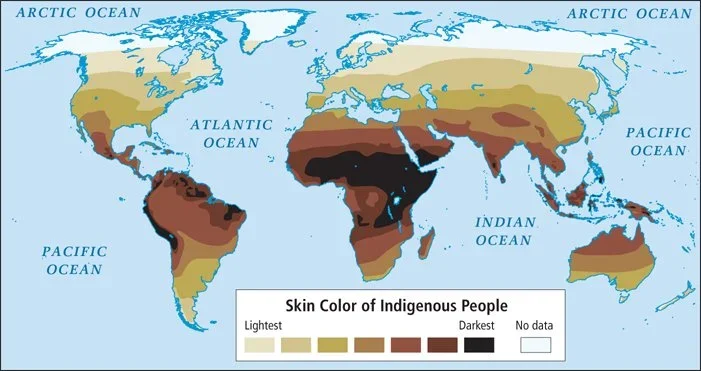
Map of skin color by geographical location in indigenous peoples
Myth: Sunscreen causes cancer.
Fact: Sunscreen prevents skin cancer.
Some people are worried about the ingredients in sunscreens causing more damage than the sun. Oxybenzone, homosalate, and octinoxate get a particularly bad rap for their absorption into the bloodstream, potential hormone disruption, and effect on marine life. However, there are many alternatives to those chemical components. Mineral sunscreens contain titanium dioxide and zinc oxide that provide protection against harmful UV rays and work well with sensitive skin. Using sunscreen consistently and reapplying as directed will help prevent your skin from aging prematurely and decrease your risk of developing harmful skin cancers that require medical intervention later.
In order to better protect your skin and minimize the amount of sunscreen that you need to use, sun protective clothing (UPF clothing) is by far the best option. It offers more consistent and reliable protection and is easier to use as it does not require reapplication or a certain application thickness for maximum efficacy. UPF clothing is cleaner than sunscreen: you won’t have to worry about staining your upholstery or having sticky hands after using it. Some of the newer UPF protective clothing (especially light colored fabrics) can also offer a cooling effect, helping to keep you comfortable on hot days spent outdoors.
Rules to live by: cover any areas you can with UPF rated sun protective clothing, and apply high SPF sunscreen to all areas that you can’t cover with UPF rated clothing. UPF clothing is an excellent (and even, a better) alternative to sunscreen for those who are wary of using it.
Pro tip: use UPF rated hats, sleeves, and gloves to keep your face, hands, and arms protected even on hot days.
Myth: Sunglasses inhibit your body’s ability to protect itself from the sun.
Fact: Sunglasses are an important sun-protection measure.
There are theories circulating online that your eyes receive input from the sunlight to trigger melanin production, tanning your skin and reducing the risk of sunburn. There is some truth to this, however, the amount of melanin produced this way is so small that it’s inconsequential in providing any meaningful protection from UV rays. Experts agree that most melanin production is caused by UV rays hitting the skin, not the eyes. Furthermore, melanin production (or tanning) prevents sunburn, but not sun damage. In short, there is no evidence that avoiding sunglasses will provide any benefits for your skin. Not only do sunglasses have no negative effects, they positively protect your eyes from harmful UV rays. Like the skin, eyes are vulnerable to damage from the sun’s rays. Prolonged exposure to sunlight can cause premature aging of the eyes, corneal sunburns, macular degeneration, cataracts, and even eyelid cancers. Wearing sunglasses is an easy and effective way to protect your eyes from harm while enjoying the sunshine.
Myth: Having a tan provides protection from UV rays and skin damage.
Fact: Having a tan means that UV damage has already been done.
It’s important to keep in mind that melanin production is not triggered unless actual DNA damage is already occurring. The melanin production is your body’s attempt to mitigate ongoing damage. Fair-skinned individuals do not produce enough melanin to counteract the damage, which is why they are so much more susceptible to skin cancers than dark-skinned individuals. As we like to say here at Dixie Dermatology, prevention is the best medicine. Protecting your skin from UV damage, including tans, is essential to preventing the development of skin cancers down the road. Remember: an ounce of prevention is worth a pound of cure! Skin cancers are treatable by surgery, but wouldn’t you rather wear your sunscreen now than have to get cut up later? We certainly would…
Conclusion
With all the misinformation and half-truths spreading online, it’s important to verify what you’re reading with the most up-to-date information from the professionals.
