Protecting Yourself in Sunny St. George
We are fortunate to live in a vibrant, active community with over 300 days of sunshine each year. However, with all that sunshine comes significant risks to your health. Learn how to enjoy our amazing opportunities while protecting your largest organ, your skin!
What’s so bad about a little sun?
There are benefits to spending time in the sun, including triggering vitamin D production, which can also be achieved through diet and exercise, and improving sleep and mental health. However, most of us overdo it in the sun, leading to increased risk of skin cancers and prematurely aging our skin. In fact, those health benefits of spending time in the sun can be achieved with as little as 5-15 minutes per day spent outdoors.
Sun damage accumulates over the years, meaning you may not see the negative effects of all those sunburns from your youth until much later. That’s why it’s important for all ages to adopt sun-conscious habits, especially here in sunny St. George.
The UV Index
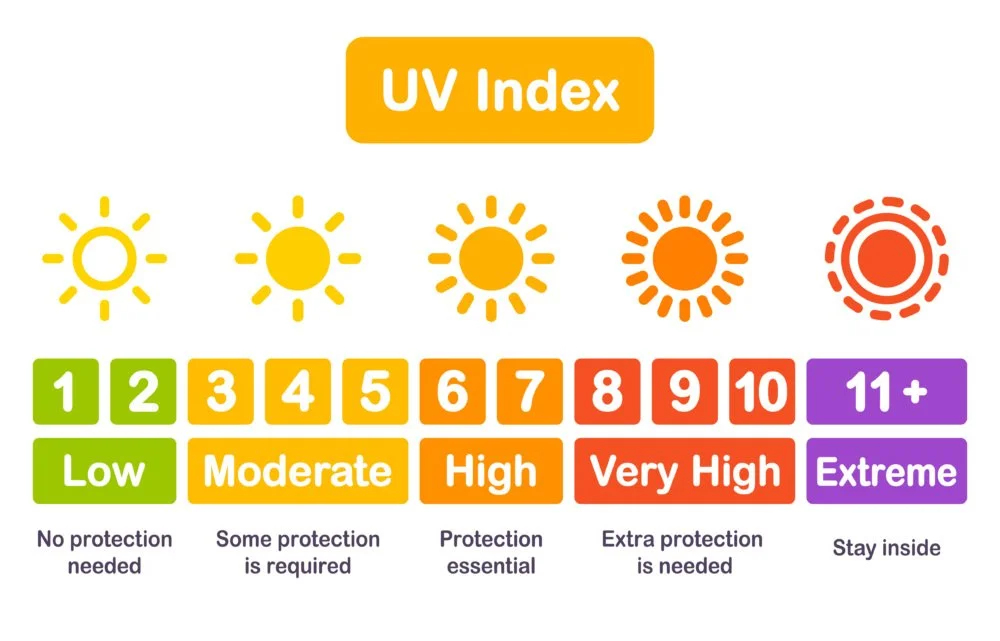
The UV index is a measure of how intense the sun’s rays are. The higher the index, the more damaging the sun rays are for your skin.
A UV index of 0-2 is low risk with minimal protection required, which is usually early in the mornings or late in the evenings in the summer.
3-5 is considered moderate and 6-7 is high, with sun protection required.
An index of 8-10 is very high and over 11 is extreme with the recommendation to avoid sun exposure if possible or use extra sun protection.
St. George typically reaches levels of 9 and higher each day during the summer months, making it important to protect yourself from harmful sun exposure during the peak hours of 10 am to 4 pm.
Protective Measures
UPF clothing is a great protective layer. These clothing options have a UPF rating and will block most harmful rays. Wearing long-sleeved shirts and pants with UPF protection will not only prevent damaging sun effects, lighter colored fabrics can actually keep you cooler by reflecting the heat from your skin. Sun protective clothing is also easier to use than sunscreen, less messy, more convenient and more effective.
Sunscreen is still a must! It is crucial to wear sunscreen on areas of your body that are not protected by UPF clothing. Look for SPF 30 or higher. Apply even if you will only be outside for a few minutes. Sun damage can even happen in the car in vehicles without high-quality window tint. Reapply often, at least every two hours, and more frequently if you’re swimming or sweating.
Shade is not enough. While shade blocks direct sunlight, up to 85% of UV radiation passes through or reflects under basic shade options like trees, patios, and umbrellas. If you’re looking for more on-the-go protection, consider a UPF rated sun umbrella.
Hats and sunglasses are in! Beyond fashion, wide-brimmed hats and sunglasses with UV protection will keep harmful rays off of your head, face, ears, and neck.
Beat the heat, and the sun!
In our desert climate, consider alternative summer activities to stay out of the worst of the sun. Opt for indoor pickleball courts (bonus, air conditioning!). Take night hikes to look at the stars or go scorpion hunting after dark with the park rangers in Snow Canyon. Schedule your swim for early morning or late evening.
Conclusion
Being aware of the beauty and opportunities, but also the risks of our sunny region can help you make the most of your summers. Taking precautions to stay out of the sun during extreme UV levels and using the sun protection that works best for you will keep your skin safe and protect your health for years to come!
